Important work stays queued
The core team is busy with support while new modules, integrations, and internal tools are repeatedly postponed.

For businesses and product teams that need to release new modules, build a service, or solve complex product tasks faster. AI supports analysis, implementation, and verification while an engineer owns the architecture and outcome.
Projects start from $500. The final estimate depends on the task, the existing system, and required integrations.
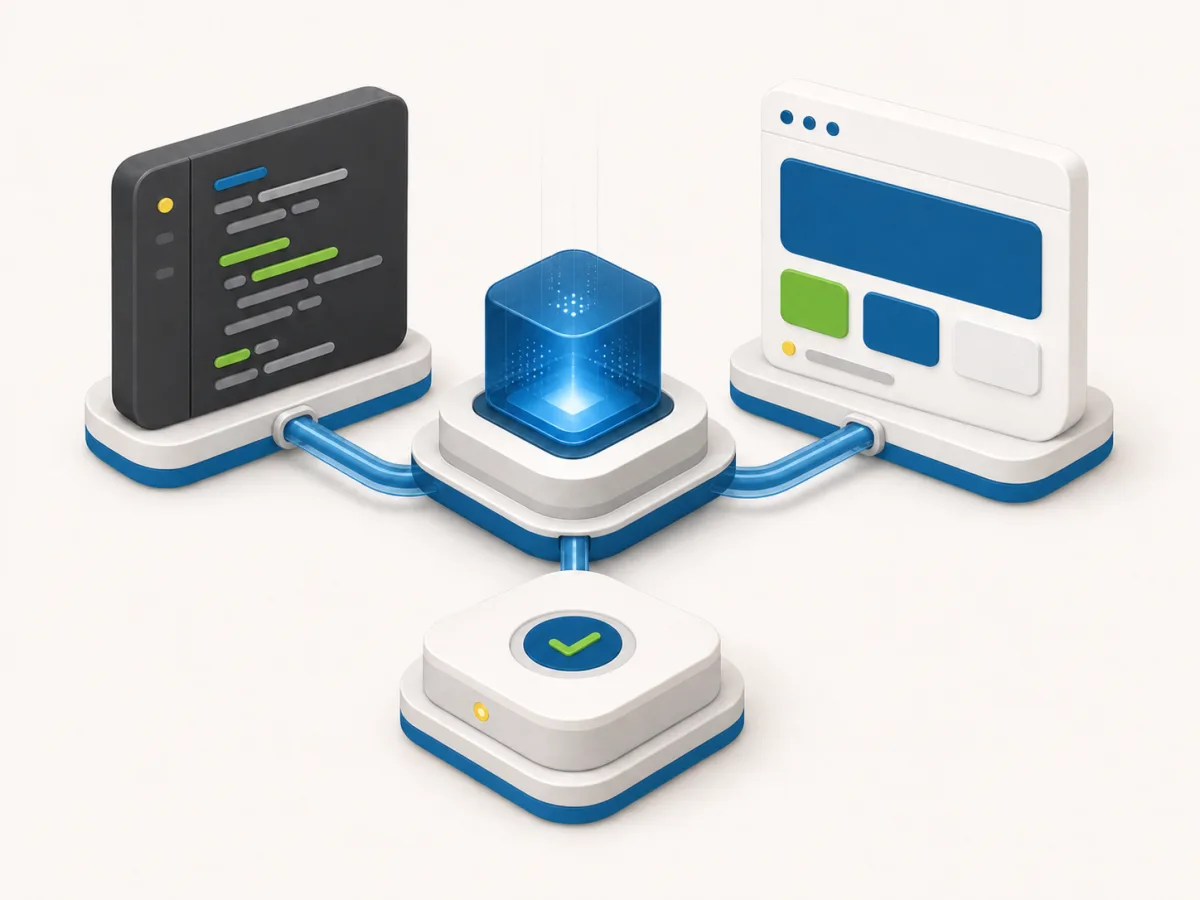
Outcome: a working feature or product with coherent logic, not a collection of disconnected AI-generated fragments.
Speed matters only when the resulting system remains understandable, testable, and ready for further development.
The core team is busy with support while new modules, integrations, and internal tools are repeatedly postponed.
A quick demo works in isolation but ignores real data, roles, failure states, and the path to production.
Pieces appear quickly, but architecture drifts, behavior is hard to verify, and each correction creates another inconsistency.
The engagement can cover the full delivery cycle: from a focused module or automation to a complete product with complex workflows and integrations.
AI is used as a tool inside an engineering process. Decisions about data, security, architecture, and quality are never delegated to a model without review.
Four clear stages, each with an agreed outcome.
We examine users, the current system, dependencies, and the intended business outcome.
We define interfaces, data, integrations, and acceptance criteria before accelerating implementation.
AI speeds analysis and execution while each decision is reviewed against the whole product.
We test the journeys, fix critical issues, and document the next reasonable step.
We have worked with major companies, private clients, and different agencies. Our projects span gamification, CRM and ERP systems, ecommerce, loyalty programs, promotional campaigns, customer accounts, and internal tools.
This experience helps apply AI to accelerate coherent, maintainable product delivery rather than isolated generation tasks.
AI reduces time spent on parts of analysis, implementation, and verification. The developer still owns system structure, data, integrations, and final quality.
No. We can deliver a module, integration, internal tool, or a defined stage of an existing product.
Yes. A self-contained journey is often the safest way to test collaboration before expanding the scope.
We define stage boundaries, dependencies, and acceptance criteria first, then provide a time and cost range.
Describe the product, required feature, and what prevents delivery today. You can include a link to the existing system.