
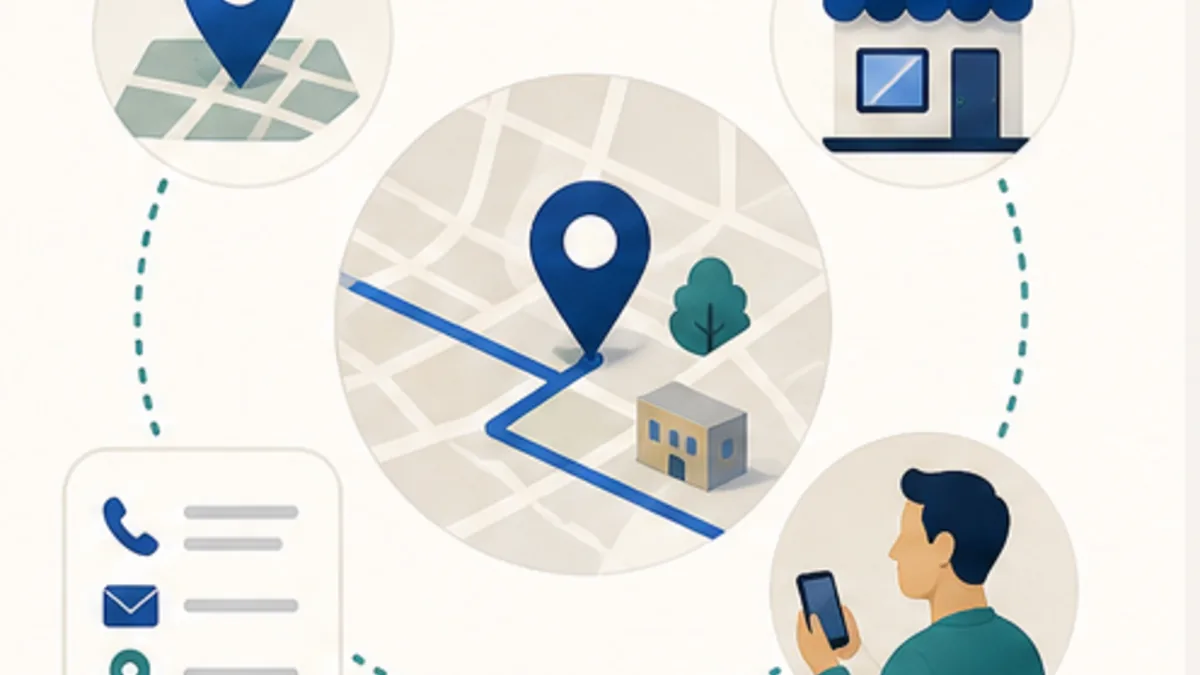
Maps and service platforms matter especially for businesses connected to a place or service: cafes, studios, schools, rentals, activities, tourism, wellness, service companies, workshops, small venues, and solo specialists. People often do not open ten websites. They compare a few profiles and choose the one that is easiest to understand.
That means profile setup is not a minor admin task. It is part of the customer path before a call, route, booking, or purchase.
Start with one consistent business record
The simplest and most common problem is inconsistent information. The website has one phone number, the map has another. Social media shows old hours. An aggregator has the previous address. One profile uses one business name, another uses a different version.
Create one source of truth: business name, short description, full address, phone, website, messengers, opening hours, service list, booking link, and contact path. Use it as the base for every listing.
Categories should match how customers search
The profile category helps platforms understand when to show the business. If a school, rental, service, or studio chooses a category that is too broad or wrong, customers may not see it in the right context.
Choose categories based on how people actually search, not only how the business describes itself internally. For activities and local services, the specific service format may matter more than a polished brand description.
Photos should answer customer questions
Photos in profiles are not decoration. They help people understand where they will arrive, who will work with them, what the place looks like, what equipment is used, what the process looks like, and what result to expect. This matters a lot in services, tourism, education, rental, food, and wellness.
A few clear real photos are better than a random collection. Show the entrance, space, process, team, service, result, important details, and anything that reduces uncertainty before the first visit.
Service descriptions should be short but specific
A map or platform profile is not the place for a long presentation. But it should quickly explain what you do, who it is for, where it happens, and how to start. Weak version: “quality services for everyone.” Stronger version: a clear description of the format, conditions, and next step.
If you have several directions, do not hide them in one vague paragraph. Separate the services so people can recognize what they need: rental, lesson, consultation, appointment, tour, delivery, diagnostics, maintenance.
Platforms are different, so do not copy blindly
Google Business Profile, maps, local directories, travel platforms, Grab-like apps, service marketplaces, and niche aggregators work differently. In one place photos and reviews matter most. In another, category, price, response speed, schedule, or availability matters more.
The base information should stay consistent, but the presentation should fit the platform. On maps, customers care about location and route. On a service platform, they care about conditions and availability. On a travel platform, they care about experience and trust. On an aggregator, they compare quickly.
The path to action should be obvious
If a customer is interested, the next step should be clear: call, message, build a route, book, choose a service, pay, or ask a question. Weak profiles often lose customers here. The information exists, but the next action is not obvious.
Check buttons, links, messengers, forms, phone numbers, and booking pages. If a profile sends people to the website homepage where they have to search again, some of them will leave.
Reviews and replies are also part of the profile
You cannot fully control reviews, but you can keep the profile alive: reply, update information, add photos, and avoid leaving it abandoned. An old or empty profile looks less active.
Even a simple polite reply shows that the business is alive and pays attention to customers. For small businesses, that can be more persuasive than complicated marketing language.
Practical profile checklist
- consistent name, address, phone, website, and opening hours;
- correct categories and service list;
- real photos of the place, process, team, and result;
- clear short descriptions without empty promises;
- links to booking, route, messenger, or purchase;
- important platforms where customers already search for this type of service;
- tracking for visits, calls, and inquiries where possible.
Practical conclusion
Maps and service platforms work as the first trust point. When they are complete and clear, customers can choose you faster. When the data conflicts, photos are weak, categories are wrong, and the next step is unclear, the business loses before the conversation starts.
Good profile setup does not replace service quality, but it helps customers see that you exist, are active, and are ready to receive their inquiry.
Practical decision checklist
- Choose the primary category and service wording.
- Verify contacts, hours, address, and booking path.
- Add current representative photos.
- Test every action from a mobile device.
Sources and methodology
The following references support the facts and technical details in this article:
Need to clean up maps, profiles, and platforms?
We can help review and organize the important online touchpoints: website, maps, profiles, aggregators, analytics, and the customer path to inquiry.
Open Business Web Presence Setup