
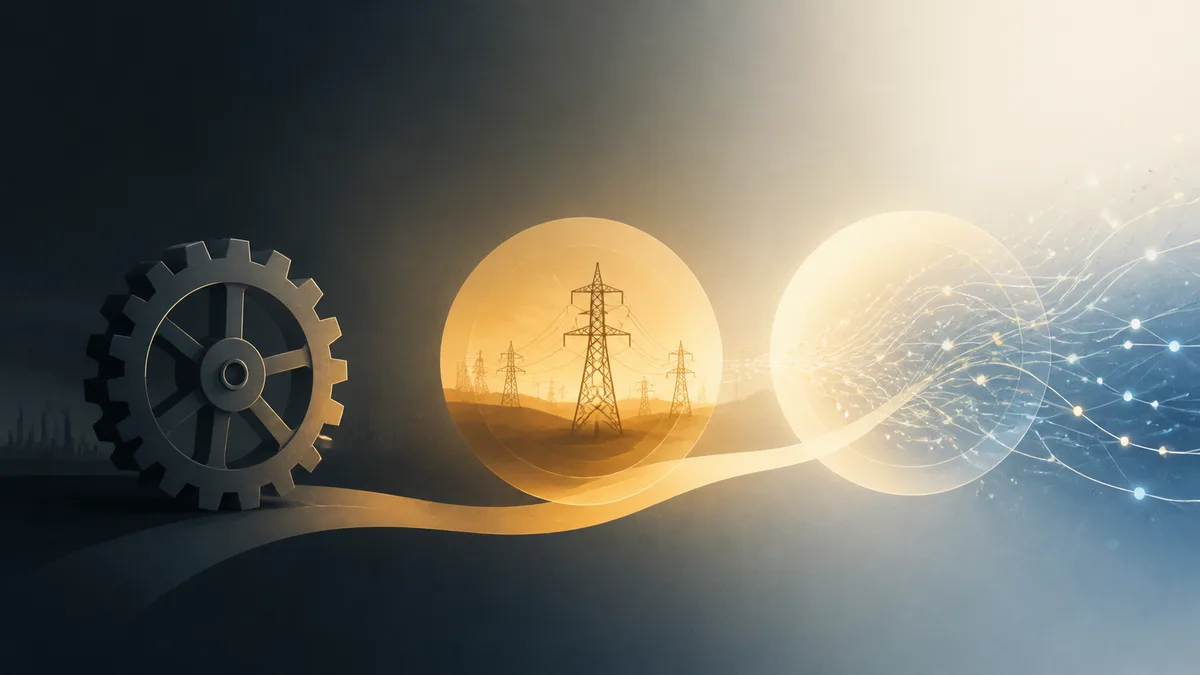
It seems that the word “revolution” is used too lightly when applied to artificial intelligence. Every new product is now “revolutionary”, every new model “changes everything”, and six months later the next one comes out. But if you step away from specific models, chatbots and marketing statements and look at what is happening on a historical scale, the picture becomes more interesting. I believe that the artificial intelligence revolution has already begun.
Not in the sense that AI has already replaced humans, AGI has arrived, or we know exactly what the job market will be like in ten years. This is exactly what we don’t know. Revolution is a process. And the process is already underway.
Moreover, in many respects, what is happening is surprisingly similar to previous technological revolutions: first, a new fundamental technology appears, then it quickly improves and becomes cheaper, after which it penetrates into different industries. Old processes first try to just do things a little faster. Then it turns out that it is more profitable to use the technology in a completely different way. The restructuring of companies, professions, infrastructure and, ultimately, society begins. This is exactly what happened before.
What makes a technology “revolutionary” in general?
The steam engine mattered for more than introducing a new kind of engine. Electricity mattered for more than replacing gas lamps with electric ones. Computers mattered for more than making calculators faster. Economists use the term general-purpose technology. Classic examples include the steam engine, electricity, and computers: technologies that do not remain confined to one industry, but gradually transform vast numbers of processes across the economy. And almost always the same thing happens: first, a new technology is built into an existing world. The real effect manifests itself later, when the world itself begins to be rebuilt to accommodate it.
To understand why what's happening with AI seems like such a revolution to me, it's helpful to take a very quick look back.
The agricultural revolution: humanity learned to produce food rather than simply find it
The Neolithic, or first agricultural revolution, lasted for thousands of years. People gradually moved from hunting and gathering to agriculture, animal husbandry and a more sedentary lifestyle. It may feel like distant history, but the change was fundamental. People had mainly searched for resources that already existed in nature. After the revolution, they began to produce those resources systematically. Stable settlements appeared, population density increased, and a much deeper division of labor became possible. From this eventually grew cities and complex states.
Technology has changed more than just the productivity of the individual peasant. It changed the very way human society is organized.

First Industrial Revolution: Mechanization of Human Muscles
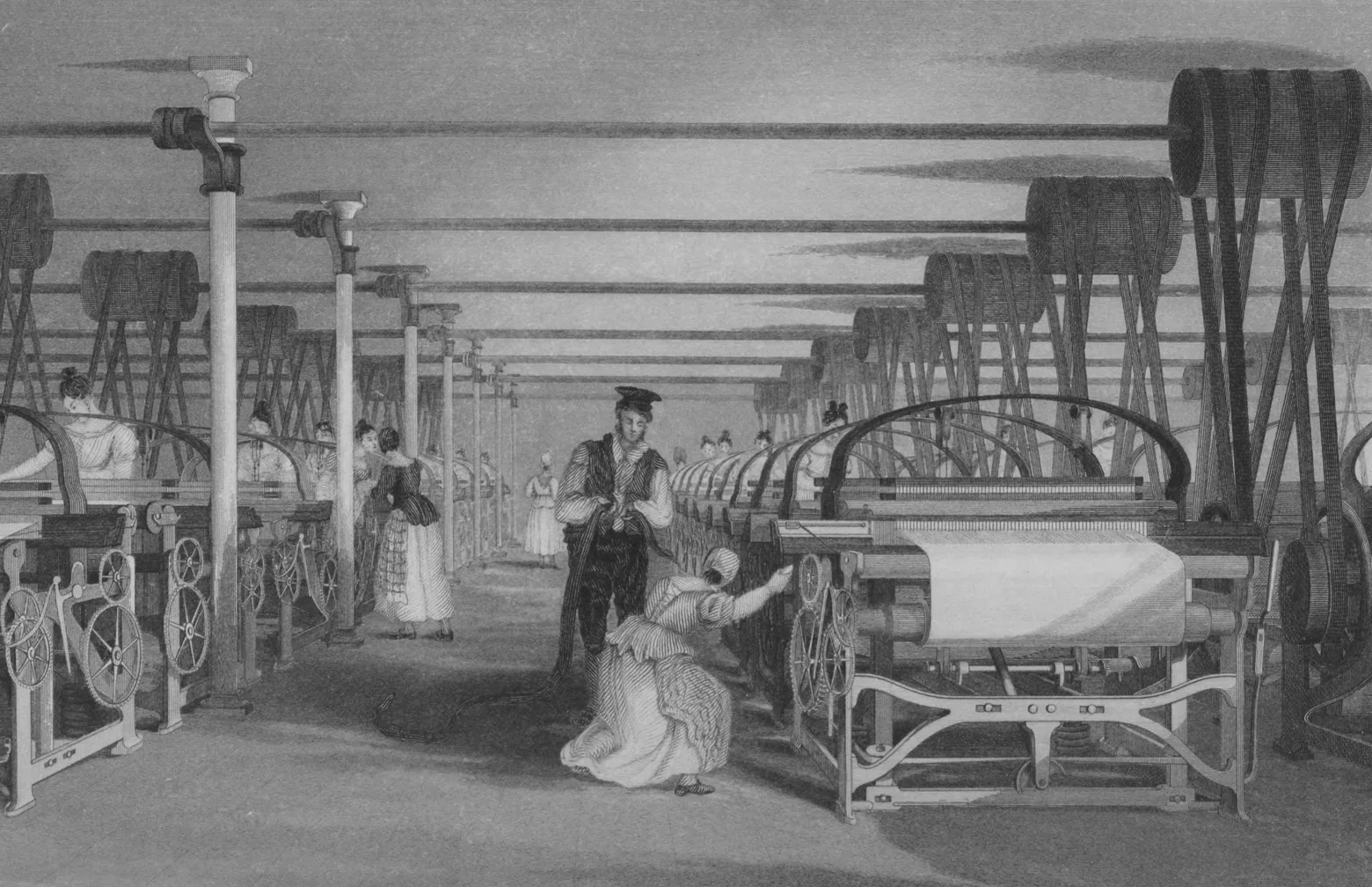
The next fundamental leap is the industrial revolution. Mechanical machines, water and then steam energy, the development of metallurgy, the factory system. The revolution is especially visible in textile production: operations that were previously performed by hand by many individual artisans were gradually transferred to machines and concentrated within factories.
An important economic change took place here: human physical work ceased to be the main limitation on production. Before the machine, you could increase output either by making people work faster or by hiring more people. With the advent of machines, one person was able to control productivity that previously required the labor of many.
And this simultaneously gave rise to completely new professions, enterprises, cities, transport infrastructure and social conflicts.
Second Industrial Revolution: It’s not enough to get new energy - you have to rebuild the factory
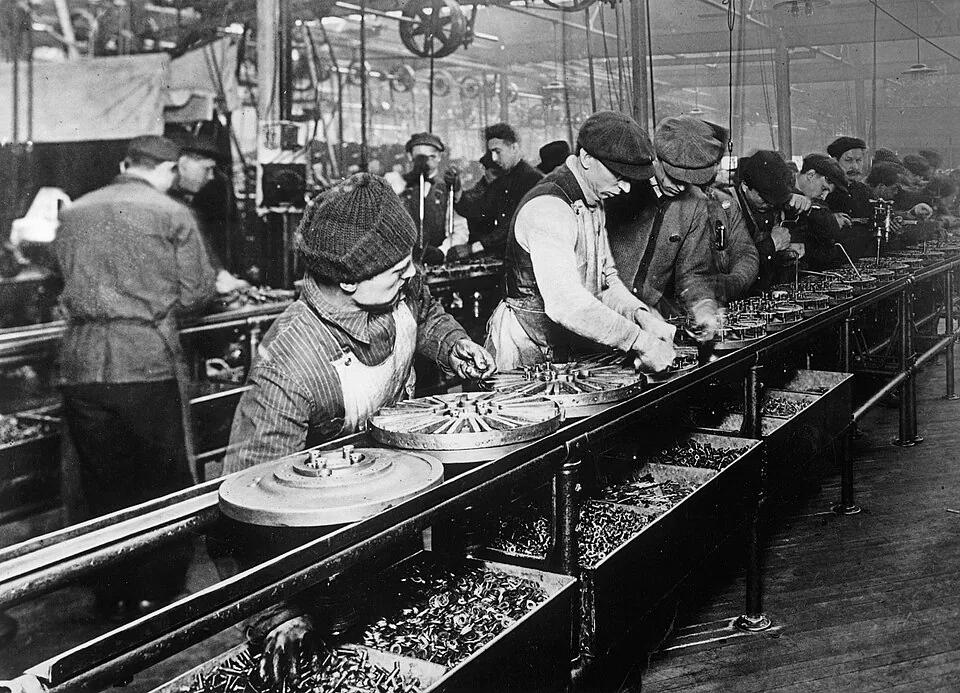
Then came electricity, the internal combustion engine, mass production of steel, the chemical industry, automobiles, communications and assembly lines. But there is a historical moment here that is especially important for the conversation about AI. When the factories began to receive electricity, the owners did not immediately rebuild production.
They simply took an old factory where a central steam engine drove the machinery through a system of shafts and belts, and replaced the steam engine with a large electric motor. Technology has become different. The organisation of production remained practically unchanged.
And the gain turned out to be relatively small. A much greater effect came later when engineers realized that electricity made it possible to put individual motors directly on machines and position equipment based on the optimal production process, rather than around a central drive shaft. That is, true productivity gains required redesigning the factory around the capabilities of the new technology. Historical studies of electrification describe this process exactly this way.
I think this is one of the best analogies for understanding modern AI. But I will return to it later.
Information revolution: automation of work with information
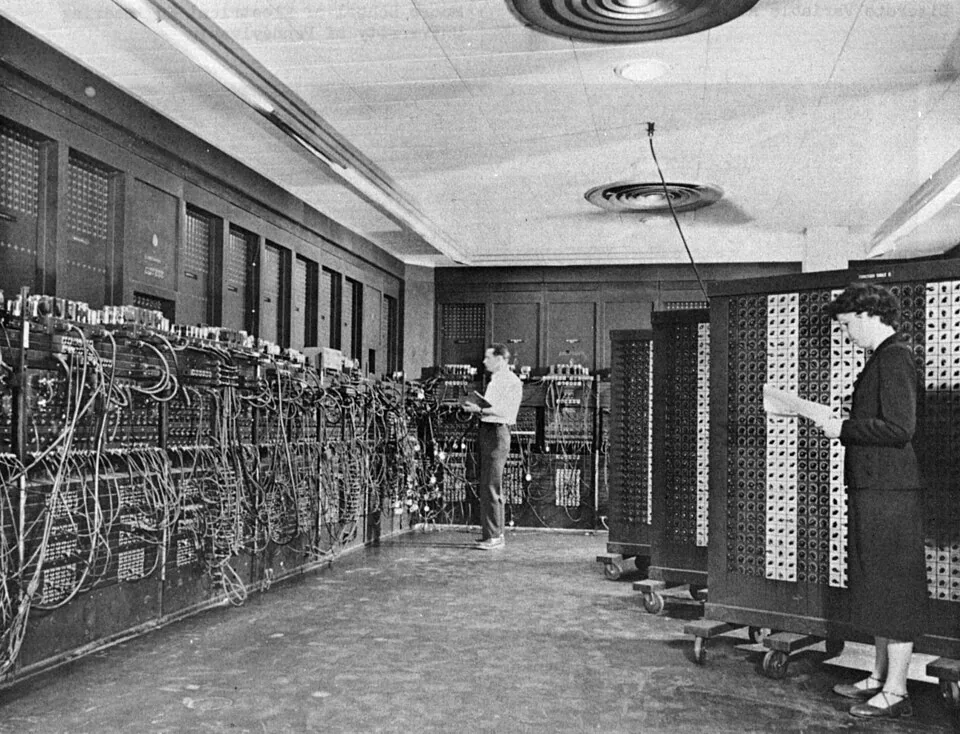
In the 20th century, not only physical labor became the object of automation. Computers begin to perform calculations, store data, search for it, copy and transform it. Then networks and the Internet almost eliminate the cost of disseminating information.
A completely new layer of the economy is emerging: software, databases, search engines, online stores, digital advertising, social networks, cloud services, online banking, streaming. If the industrial revolution gave man cheap mechanical power, then the digital revolution gave him cheap calculations and cheap information processing. But for a long time the computer remained just a tool.
A person determined the sequence of actions, pressed the buttons, wrote the program, and formulated the database query. The machine followed instructions incredibly quickly, but had little understanding of what they actually wanted from it.
And this is where AI comes in.
In my opinion, the key difference between the current stage is here. AI is starting to reduce the cost of something other than physical action or even computation itself. It begins to reduce the cost of some intellectual work. Moreover, by intellectual work I do not mean the philosophical question of whether a model “thinks” in the same way as a person. The economy does not require an answer to that question.
A much more important practical question is this: which outputs of human intellectual work can a system produce at an acceptable quality and cost?
- write and review text or software;
- analyse documents, medical images, and large datasets;
- find patterns, create images, and translate conversations;
- answer customers, prepare marketing materials, and compare proposals;
- generate reports and operate software through its interface.
AI is now gradually learning to perform whole sequences of these actions in pursuit of a goal. That, in my view, is especially important.
AI has long gone beyond the “cool chatbot”
We can debate the quality of individual models, but the scale of the technology's adoption is no longer seriously in doubt. According to the Stanford AI Index 2026, in 2025, 88% of organizations surveyed were using AI, and generative AI was used in at least one business function by 70% of organizations. At the same time, full-fledged AI agents are still used much less frequently - in most functions their penetration is still measured in single-digit percentages. This is an interesting combination. On the one hand, AI has already penetrated almost everywhere into business. On the other hand, the most radical form of its application is just beginning.
Stanford cites another significant figure: Generative AI has achieved approximately 53% population penetration in just three years—faster than the personal computer and the Internet. And private investment in AI in the US alone amounted to $285.9 billion in 2025. We therefore have mass adoption, enormous capital investment, rapidly growing capabilities, expansion across many industries, new infrastructure, and changes in the organisation of labour—all while integration remains fairly primitive in many companies.
This reminds me much more of the early phase of a technological revolution than a mature market for another category of software.
Software development: one of the most obvious examples
For me, software development is now the clearest example. Only a few years ago, an AI coding assistant mainly suggested the next line of code. Today's agents are able to read a repository, find the necessary files, write code, change several parts of the project, run commands, tests, see errors, fix them and prepare changes for human review.
The unit of interaction itself changes. Previously: “write me a function.” Now: “implement this task in the project.” And the next stage: “here is the goal - make a plan yourself and bring the work to a result.” And this is no longer futurology. In April 2026, Google reported that 75% of new code within the company is generated by AI and then reviewed by engineers. In the fall of the previous year, the figure was 50%.
Google also claims that one complex code migration where engineers and agents worked together was completed six times faster than a similar effort a year earlier, and the company's engineers are moving to a model where they run multiple autonomous agents to complete tasks in parallel. This does not mean that 75% of a programmer's work has disappeared. That would be the wrong conclusion. Typing code is only part of development. Defining the problem, architecture, requirements, verification, integration, and responsibility for the outcome all remain. But the structure of this work is already changing.
An engineer looks less and less like a person who independently types each line, and more and more like a person who formulates a problem, manages a process, checks the result and makes decisions. That is, approximately the same thing happens as once happened to a worker at a machine. A person does not necessarily disappear. The point at which his work creates the greatest value changes.
And at the same time, AI is not yet a magic button
It is important here not to go to the opposite extreme. There are jobs where modern models provide huge gains. There are jobs where the gain is small. And sometimes AI can even slow down work. At the beginning of 2025, METR conducted an experiment with experienced open-source project developers. On a specific set of fairly complex tasks, developers with AI tools spent an average of 19% more time, although they themselves were confident that AI had sped them up. Later METR data showed signs of acceleration with newer tools, although the researchers explicitly cautioned that they still could not estimate the size of the effect reliably.
To me, this is not an argument against an AI revolution. On the contrary, it looks much like the early stages of previous technological revolutions. The new technology already has unusual capabilities, but we still have little understanding of where, how and in what form it can be rationally used.
Customer support: automation works, but people don’t disappear yet
Another interesting example is Klarna. After the launch of the AI assistant, the company reported that in the first month it conducted 2.3 million conversations, processed about two-thirds of all support requests and performed the amount of work comparable to approximately 700 employees. The company also reported a reduction in average issue resolution time from 11 minutes to less than two. If you stop here, you get the perfect “AI replaced 700 people” story.
But what happened next was no less interesting. In 2025, Klarna management acknowledged that too much automation had undermined the quality of service, and the company began to strengthen human support again. The CEO later said that the company took the path of cost cutting too quickly and is now shifting the use of AI towards improving products and services. That is why this case is useful. It shows that the revolution does not necessarily follow a simple human → AI substitution. The result is often more complex: an existing profession → automation of some tasks → a changed process → a new combination of human and machine.
How exactly these roles will be distributed is still an open question.
Science: AI can speed up not the work of a company, but the acquisition of new knowledge
There is an even more fundamental area. AlphaFold solved one of the most difficult problems in computational biology—predicting protein structure from its amino acid sequence. Today, the AlphaFold database contains predictions for more than 200 million protein structures, and more than 3 million researchers from more than 190 countries have used tools based on it. The work on AlphaFold was awarded the 2024 Nobel Prize in Chemistry.
Here, the effect of AI is already more difficult to measure in “employee savings.” AI reduces the cost of the research cycle itself. Tasks that previously might have required months of laboratory or computational work can, in some cases, be significantly accelerated.
And if this principle extends further - to the search for drugs, materials, modeling of physical processes, automated laboratories - the economic effect will not only be in reducing costs. It may consist in accelerating the pace of emergence of new knowledge and technologies. And this is a second-order effect: AI helps to create the next technologies faster.
Medicine: AI is already inside regulated devices
AI in medicine has also long ceased to be just an experiment. By the spring of 2026, the American FDA had already authorized more than 1,400 medical devices using AI, with especially many such systems being used in radiology, as well as in cardiology and neurology. These are still mainly specialized systems, and not a universal “AI doctor”.
But this is how big technologies tend to spread: not by the emergence of one device that immediately replaces everything, but by thousands of individual applications. And then gradually they begin to connect.
Autonomous transport: AI has already left the screen and entered the physical world
Another frontier is the management of physical objects. By March 2026, Waymo was providing around 500,000 paid, fully autonomous trips each week across ten US cities. Its weekly trip count had grown roughly tenfold in less than two years. This is still a long way from replacing all road transport. But half a million commercial trips per week is no longer a laboratory experiment. And here the potential combination of two revolutions is especially clearly visible: AI + robotics.
So far, most of the effect of generative AI exists inside computers. If models can reliably control robots, machines, warehouses, production systems and other physical infrastructure, the boundary between the “information” and “industrial” revolutions will virtually disappear.
But the most interesting stage begins with AI agents
In my opinion, chatbots are not the ultimate form of AI at all. Chat is simply a very convenient interface through which a person first gained direct access to a universal model. Much more important is the appearance of agents.
A typical model works something like this: person → request → model → response. Agent: person → goal → planning → using tools → several actions → checking the result → next actions → result. That is, AI begins to transform from a generator of information into an executor of processes.
It can work with software interfaces, files, databases, CRM systems, code, APIs, email, calendars, and corporate systems. And then it is no longer a separate text or a separate operation that is automated, but a chain of work. The Stanford AI Index shows that this particular part of the market is still at an early stage: almost all large organizations in the sample use AI, and only a few percent use full-fledged agents in most business functions.
For me, this is perhaps the most important indicator of the entire report. The revolution has already begun, but so far we have only automated the most obvious first layer.
Why is something similar happening now that happened with electricity?
Let us return to the factory analogy. Imagine a company with one hundred employees. It buys an enterprise subscription to an AI service, gives everyone access to a chat interface, and people begin writing emails, documents, presentations, and reports a little faster. This is useful. But essentially we did the same as the factory owner who replaced the central steam engine with an electric motor. We changed the technology, but practically did not change the process itself. The next stage is much more interesting.
Why would a person first manually read a client’s letter, then copy the data into CRM, then look for information in ERP, then write a response, create a task and assign an executor? If the system is able to understand a letter, receive data from CRM, request ERP, check rules, prepare a solution, update systems and contact a person only in a non-standard situation - the business process itself may look completely different. This is where the real effect begins. The question is no longer, “How can we give every employee AI?” It becomes, “What should this process look like if a machine can now perform some of its intellectual operations?”
The story of electricity shows that the full impact of a general-purpose technology often occurs only after a major organizational overhaul. The Federal Reserve Bank of Chicago makes a similar analogy for computerization: in a study of large American companies, the full effect of computer investments on productivity took five to seven years to become apparent and required significant accompanying organizational changes. Therefore, the absence of an instant performance boost from the purchase of enterprise ChatGPT does not at all mean the absence of a revolution. Perhaps we are simply installing an electric motor in place of a steam engine for now.
AI isn't just getting smarter. It's also falling in price quickly.
Major technological revolutions have another trait in common. At first, the technology is expensive and available to few. Then the cost of using it falls sharply. This happened with computing, communication, and information storage. The same is happening with AI models. According to the Stanford AI Index 2025, the cost of running a model with roughly GPT-3.5 quality on one standard benchmark dropped from about $20 to $0.07 per million tokens between November 2022 and October 2024—more than 280 times. At the same time, small models become capable enough to run locally on computers and mobile devices.
This matters just as much as improvements in quality. Let's imagine that an intelligent operation becomes not only possible, but also ten, a hundred or a thousand times cheaper. Then applications appear that previously simply did not make economic sense. This is how the Internet gave birth to services that would have been impossible to build if each message had cost the same as an international phone call.
Perhaps the main resource of the new economy is cheap, scalable “cognition”
The Industrial Revolution dramatically reduced the cost of mechanical power. Computers reduced the cost of computation. The internet reduced the cost of transmitting information. AI could reduce the cost of turning information into a useful intellectual result—not a perfect or fully autonomous result, and not necessarily one equal to the best human work, but one available almost instantly and potentially at enormous scale. If this happens, the consequences could be much broader than the chatbot market.
For example, a small company will be able to afford the amount of analysis, development, design, localization, support and marketing that previously required a large staff. A strong specialist will have the opportunity to manage several agents working in parallel. The cost of launching a new product may decrease.
At the same time, competition will increase: if it becomes easier to create software, content or marketing materials, just having a product will no longer be such a serious advantage. That is, AI is simultaneously capable of democratizing production and devaluing the results of this production. And this is where the economic consequences become far from obvious.
What will happen to work?
This is, of course, the most painful question. And here it seems to me a mistake to take one of two extreme positions: “AI will not replace anyone, it’s just another tool.” or “In a few years, people won’t have to work at all.” We do not yet have sufficient evidence for any of these claims.
Historically, automation has destroyed some jobs, disrupted others, and created new ones. AI differs because it reaches so directly into a large number of cognitive professions: programmers, designers, translators, marketers, analysts, lawyers, accountants, support staff, managers, and researchers. In this case, it is usually not entire professions that are automated, but individual tasks within them.
In the next phase, we are therefore more likely to see professions reconfigured than disappear all at once. If previously the value of a programmer largely lay in the ability to independently implement a solution, then architecture, problem statement, verification, choice of compromises and responsibility for the outcome are becoming increasingly important. If AI can write advertising copy, the value of simply being able to “write copy” goes down. But the understanding of the audience, the product, the strategy and the ability to determine what kind of text is needed at all remain.
That is, technology moves a person to a higher level in the decision-making chain. The only question is how many people will be needed at this level. And we really don’t know this yet.
Three possible endings to the current revolution
I would conditionally divide the possible development of events into three scenarios.
Scenario 1: AI as an everyday assistant
Almost every specialist uses an AI assistant. Productivity is growing noticeably, but most professions remain the same. AI is becoming the same natural layer of work as a browser, search engine, Excel or instant messenger today.
In twenty years it will be strange to imagine an accountant, engineer or manager without AI tools, but the human structure of companies will remain generally recognizable. This is the most conservative option.
Scenario 2: companies designed around AI
AI is becoming reliable enough to perform long chains of tasks. Then the matter is no longer limited to increasing the productivity of an individual. The sheer number of people needed to perform certain functions begins to shrink dramatically.
A company of twenty people will be able to produce a volume of work that previously required two hundred. AI-native companies are emerging, where processes are initially built on the basis that a significant part of the operations is performed by agents, and people are engaged in management, control, relationships and non-standard solutions. This is already a change in the structure of the economy.
Scenario 3: AI enters the physical world
If the development of models coincides with breakthroughs in robotics, autonomous vehicles and automated production systems, AI will cease to be primarily a technology for office work. It will gain a physical embodiment. Then a much wider range of human actions will fall under automation.
And the consequences will no longer be comparable to the advent of the Internet, but to several previous industrial revolutions at the same time. Whether this particular scenario will be realized, I don’t know. And I don’t think anyone knows this now.
Why do I still call this a revolution now?
One might argue: if we don’t yet know the consequences, why talk about revolution at all? But this is where, in my opinion, the error in the perception of history arises. From the textbook, the industrial revolution looks like a complete chapter: steam engine → factories → railroads → mass production → modern industry.
For someone living at the beginning of that process, no completed chapter existed. There was one new machine, then another, then new factories, and then a railway. Most future consequences could not be seen in advance. The same thing happened with electricity and computers. We call them revolutions from the position of knowing the result.
We do not have that advantage today because we are inside the process. But some signs are already visible: the technology applies across many industries; its capabilities are growing rapidly; its cost is falling; adoption is extremely fast; vast new infrastructure is being built around it; companies are changing their processes; new forms of automation are emerging; AI accelerates the development of other technologies; and the human role in production is gradually changing. Separately, none of these factors proves anything. But together they look quite convincing to me.
The biggest mistake is trying to guess the final product
Perhaps in twenty years, ChatGPT, Claude, Gemini and other products we know today will look about as archaic as the browsers and computers of the early 1990s. It doesn't matter. The Industrial Revolution was not a revolution of one particular steam-engine model. The information revolution was not the Windows 95 revolution.
The AI revolution is also unlikely to be the revolution of one particular neural network. The main change is not a product, but a new economics of intellectual work. Where every intellectual operation once required human attention, a second source of execution is gradually emerging: machines.
This second source is still unreliable. It has strange limitations. It can solve a highly complex problem and then fail at an elementary one. The Stanford AI Index describes this characteristic as a jagged frontier: modern systems perform exceptionally on some tasks and fail unexpectedly on others.
But opportunities are growing faster than organizations can adapt to them. And it is this gap that may become the main plot of the coming years.
Therefore, the main question is no longer “will the AI revolution happen?”
I think it's outdated. It's already happening. Other questions are much more interesting.
- How autonomous will agents become?
- How many intelligent operations will be more cost-effective to transfer to machines?
- How quickly can companies adapt processes to new technology?
- How many people will a company need to create the same amount of value?
- What new products will be possible due to the virtually unlimited scalability of some types of knowledge work?
- How will education change if the ability to quickly get an answer is no longer a scarcity?
- What will happen when intelligent automation and robots are combined en masse?
Most importantly, what will remain the primary scarce resource once some forms of intelligence are no longer scarce? Perhaps responsibility, trust, human relationships, capital and energy, or the ability to frame the right problem. Or perhaps something will appear that today we don’t even consider a separate resource. That is why I am not ready to confidently say how the AI revolution will end.
But the further it develops, the harder I find it to see what is happening as merely another cycle of technological hype. The steam engine scaled muscle power. Electricity made it possible to distribute energy almost anywhere. Computers scaled computation. The internet scaled the transmission of information. AI is beginning to scale intelligent work. And if this process continues at least in the direction that we are already seeing today, the consequences will be much wider than the neural networks market.
We're just too close to the beginning to see them all yet.
Sources and methodology
This article compares historical technological transitions with current evidence about AI adoption and practical use. Time-sensitive figures and examples are checked against primary sources:
Want to apply AI where it creates measurable value?
We can help design and deliver an AI-enabled product or workflow while keeping architecture, quality, and business outcomes under control.
Explore AI-driven development